

You Know the Color. Here Is the Rest of the Story.
BREAST CANCER AWARENESS MONTH | OCTOBER 2026
You Know the Color. Here Is the Rest of the Story.

Every October we wear pink, and we mean it. But if someone asked us about breast cancer symptoms, many of us would suddenly need to check our phone.
So here is a pop quiz. Name one sign of breast cancer. You said “a lump”. Everyone says a lump. Now name a second one. Take your time.
If nothing came to mind, you are far from alone.
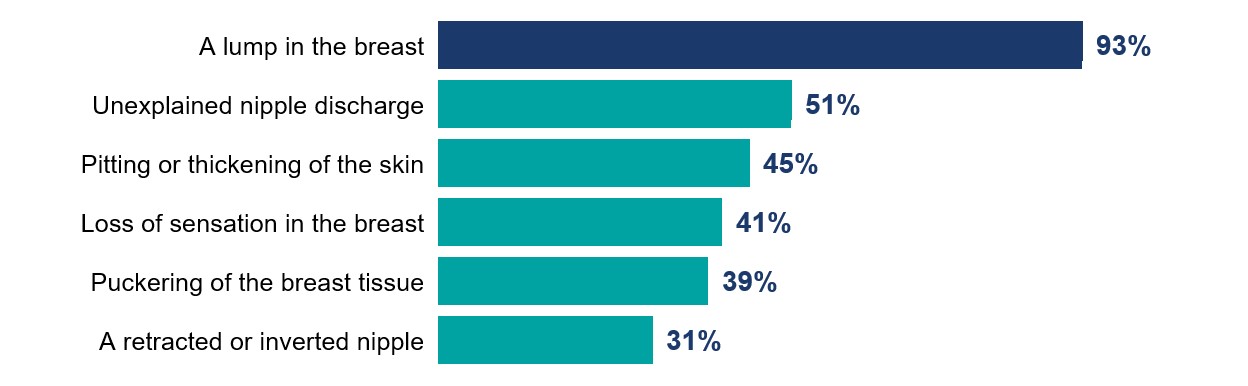
Prooportion of adults who identify each symptom as a warning sign of breast cancer (2023 national survey).2
Nine in ten of us can spot the the most well-known symptom.one. Fewer than half can spot most of the rest.2 And in an April 2026 survey, 44% of women wrongly believed mammograms should start at age 50.14 The goodwill is real. The detail has simply not caught up yet.
That would be a harmless bit of trivia if the disease were rare. It is not.
 The scale of the disease.
Where it starts, and where it can go
Breast cancer begins when cells in the breast grow out of control.3 Left alone, those cells do what any ambitious tenant does: they look for more room. First the lymph nodes nearby, then the bones, lungs, liver or brain.5 Doctors track that journey with a stage, and the stage is the whole story.
The five stages, in one line each.
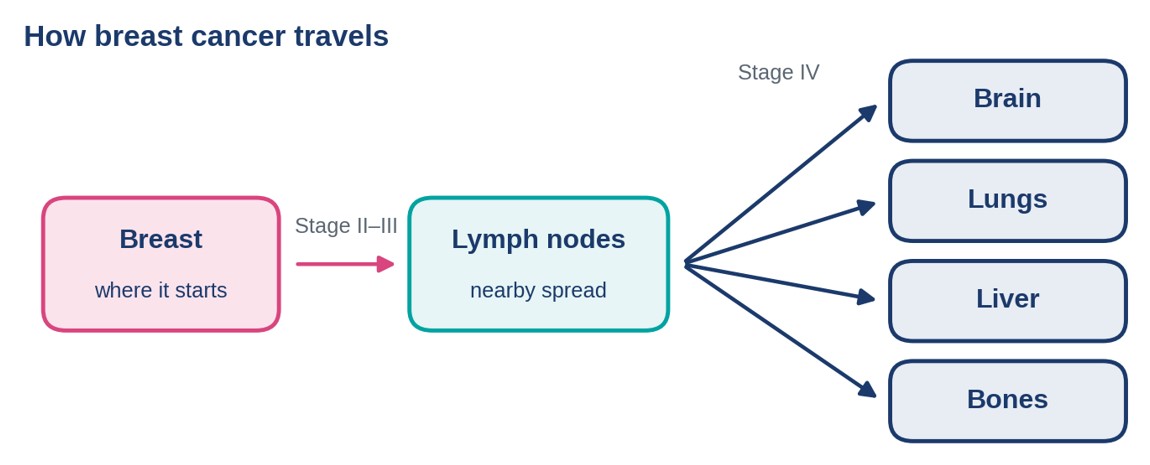
The usual route of spread.5
Now watch what timing does. Same disease, two very different roads.
The road when it is caught early

The road when it is not
 Detection to recovery, and detection to loss. The gap between 100% and 33.8% is mostly time.3
There is real progress to report. The US death rate from breast cancer has fallen by about 44% since its peak in 1989.Screening is a real part of that story: regular mammograms are proven to reduce deaths from breast cancer,⁶ because a cancer found early is a cancer that can be treated. Every mammogram booked on time helps keep the death rate trending down.3
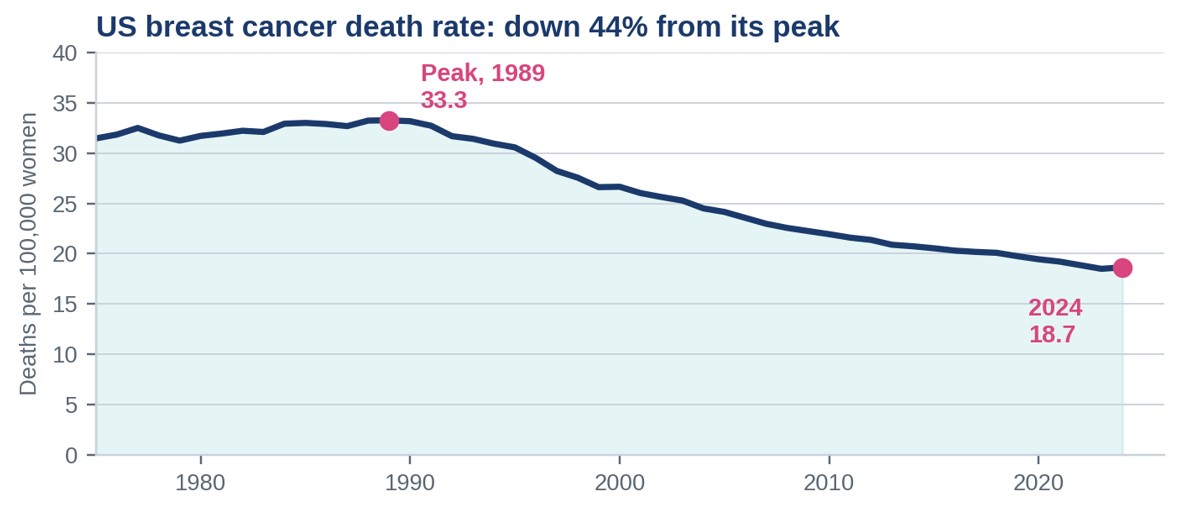
US female breast cancer death rate per 100,000 women, age-adjusted, 1975 to 2024.3
That second road is not always a matter of missed chances. Some people do everything right and the cancer still returns years later. Which brings us to another message worth hearing this month.

So who is actually on it?
A fair question, and the answer is more people than most of us realize. The work flows outward, from global targets to a clinic near you.
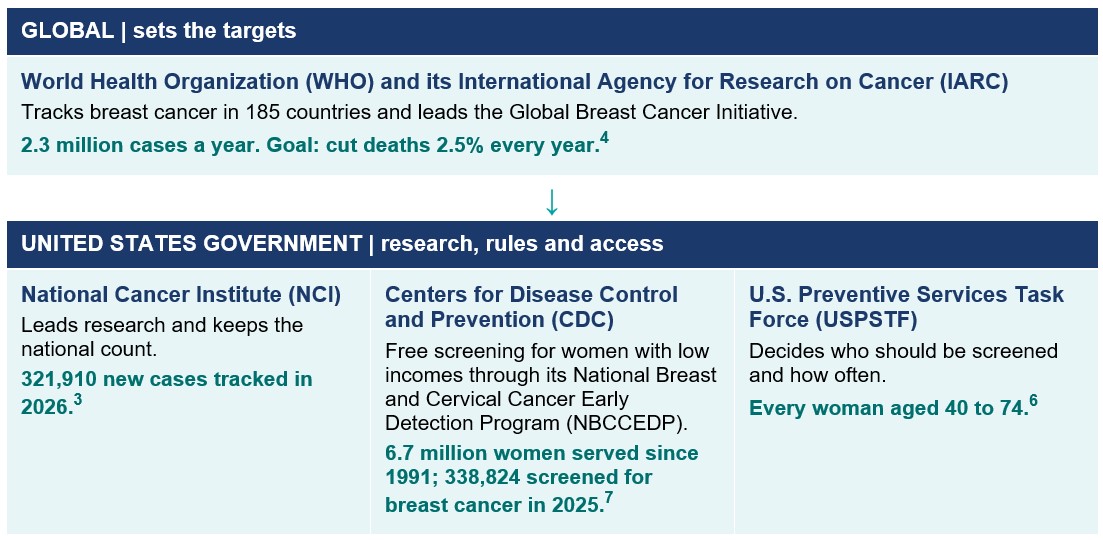
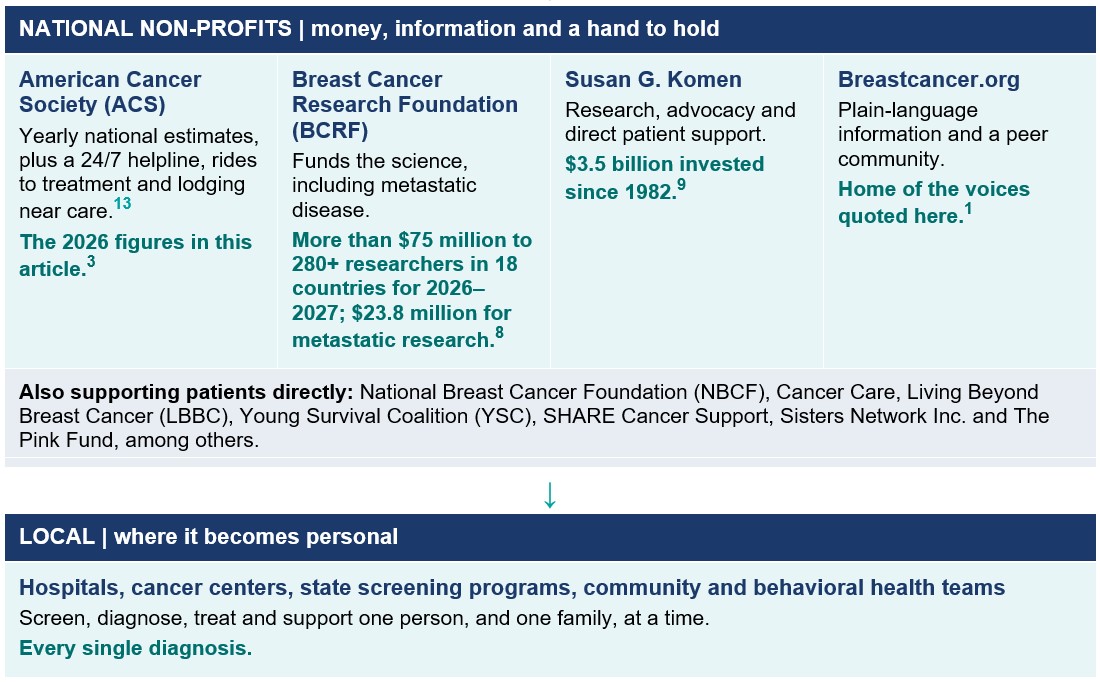
Keris113, for what it is worth: BCRF is putting $23.8 million into 102 metastatic breast cancer projects in 2026–2027.8 It should not be a secret.
The side effect that does not show on a scan
Here is the part the scans do not show. Long before the body feels the treatment, the mind feels the diagnosis. And it does not hand the feeling back when the appointments end.
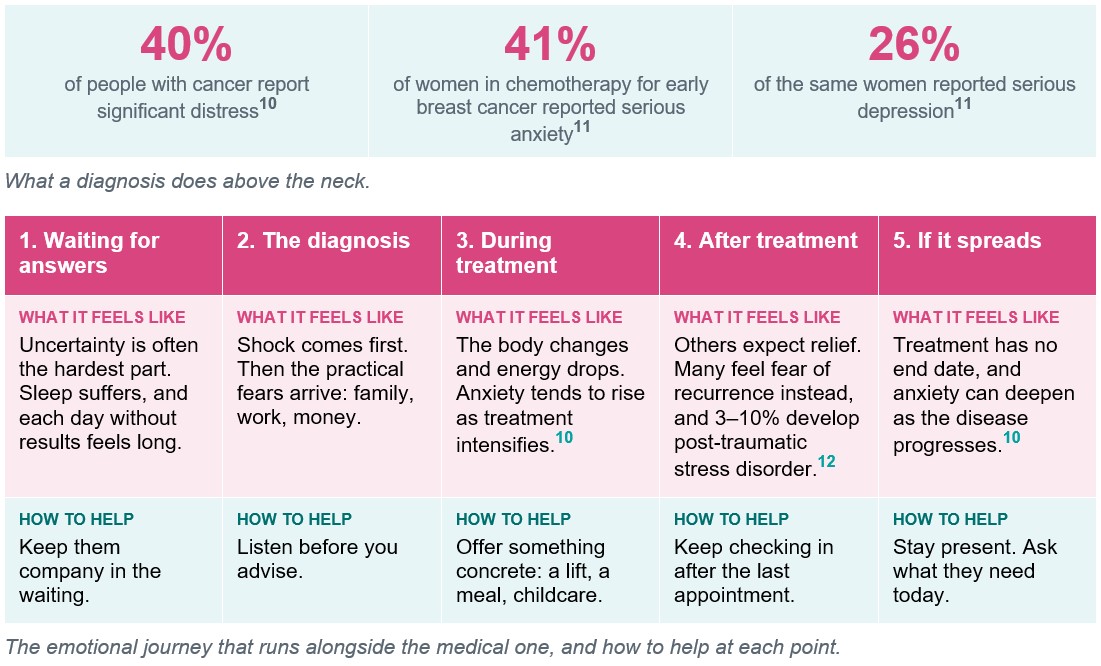
The load is not shared evenly either. Distress lasts longer in people who are younger, who have lived with depression or anxiety before, or who face more significant treatment.10 And the gap shows up across whole communities.
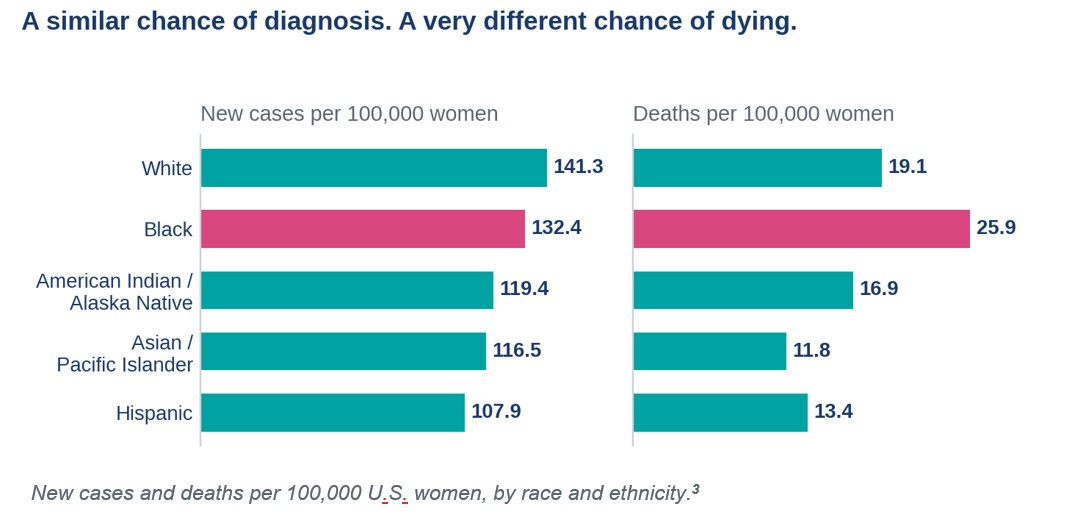
Black women are diagnosed at almost exactly the same rate as women overall, yet die at a far higher one: 25.9 per 100,000 compared to 18.9.3 The CDC’s free screening program reaches just 13.5% of the women who qualify for it.7
Put those facts together and awareness becomes something practical: getting the right knowledge, and the right kind of care, to the people who need it most.
Five things you can do within the next 30 days
None of this needs a big gesture. It needs five small ones.

If someone you love is struggling with the mental burden breast cancer carries, help them find support. In the United States, the 988 Suicide and Crisis Lifeline answers calls and texts at any hour.
Where Syra Health comes in
The gaps in this story are the ones our work is built around: distress that goes unseen, questions that go unanswered, and communities that receive less. We work on all three.
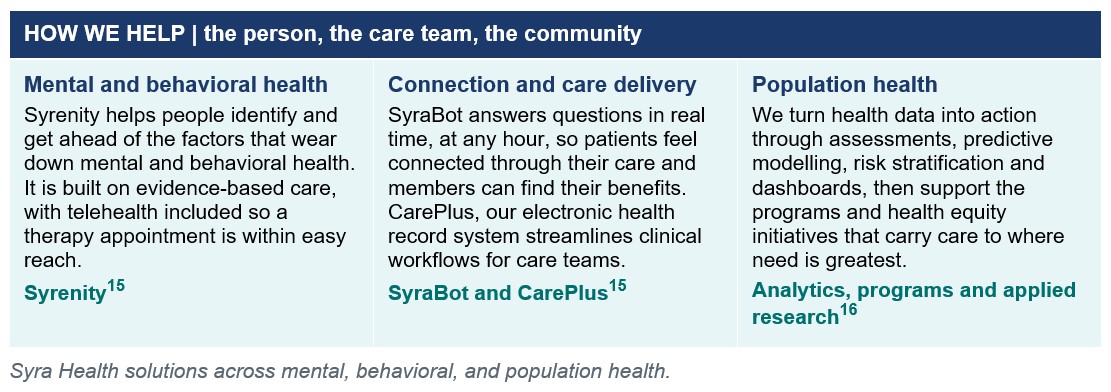
For a person facing a diagnosis, that can mean support for the mind alongside treatment for the body. For a health system or a state, it can mean seeing which communities are missing out on screening and care, and doing something about it.
So wear the pink, know what stands behind it, and look after the person as well as the diagnosis. That is the kind of care we are working to build, for every community.
References
- Breastcancer.org. Breast Cancer Awareness Month. Accessed October 2, 2026. https://www.breastcancer.org/about-breast-cancer/breast-cancer-awareness-month
- The Ohio State University Comprehensive Cancer Center – Arthur G. James Cancer Hospital and Richard J. Solove Research Institute (OSUCCC – James). Most breast cancers don’t start with a noticeable lump. Published October 16, 2023. Accessed October 2, 2026. https://cancer.osu.edu/news/most-breast-cancers-dont-start-with-a-noticeable-lump
- National Cancer Institute, Surveillance, Epidemiology, and End Results (SEER) Program. Cancer Stat Facts: Female Breast Cancer. Accessed October 2, 2026. https://seer.cancer.gov/statfacts/html/breast.html
- International Agency for Research on Cancer (IARC), World Health Organization. Breast cancer cases and deaths are projected to rise globally. Press Release No. 361. Published February 24, 2025. Accessed October 2, 2026. https://www.iarc.who.int/wp-content/uploads/2025/02/pr361_E.pdf
- American Cancer Society. Treatment of Breast Cancer by Stage. Accessed October 2, 2026. https://www.cancer.org/cancer/types/breast-cancer/treatment/treatment-of-breast-cancer-by-stage.html
- U.S. Preventive Services Task Force. Breast Cancer: Screening. Final Recommendation Statement. Published April 30, 2024. Accessed October 2, 2026. https://www.uspreventiveservicestaskforce.org/uspstf/recommendation/breast-cancer-screening
- Centers for Disease Control and Prevention. About the National Breast and Cervical Cancer Early Detection Program. Updated September 18, 2026. Accessed October 2, 2026. https://www.cdc.gov/breast-cervical-cancer-screening/about/index.html
- Breast Cancer Research Foundation. The Breast Cancer Research Foundation Awards More Than $75 Million in Scientific Grants. Published September 24, 2026. Accessed October 2, 2026. https://www.bcrf.org/blog/bcrf-awards-over-75-million-dollars-in-scientific-grants/
- Susan G. Komen. Our brand story. Accessed October 2, 2026. https://brand.komen.org/
- National Cancer Institute. Adjustment to Cancer: Anxiety and Distress (PDQ®)–Health Professional Version. Accessed October 2, 2026. https://www.cancer.gov/about-cancer/coping/feelings/anxiety-distress-hp-pdq
- National Cancer Institute. Depression (PDQ®)–Health Professional Version. Accessed October 2, 2026. https://www.cancer.gov/about-cancer/coping/feelings/depression-hp-pdq
- National Cancer Institute. Cancer-Related Post-Traumatic Stress (PDQ®)–Health Professional Version. Accessed October 2, 2026. https://www.cancer.gov/about-cancer/coping/survivorship/new-normal/ptsd-hp-pdq
- American Cancer Society. Cancer Support Resources, Programs, and Services. Accessed October 2, 2026. https://www.cancer.org/support-programs-and-services
- The Ohio State University Comprehensive Cancer Center – Arthur G. James Cancer Hospital and Richard J. Solove Research Institute (OSUCCC – James). Survey finds many women still believe mammograms should start at age 50. News release, published April 29, 2026. Accessed October 2, 2026. https://sciencesources.eurekalert.org/news-releases/1126088
- Syra Health. Products. Accessed October 2, 2026. https://www.syrahealth.com/products
- Syra Health. Population Health. Accessed October 2, 2026. https://www.syrahealth.com/population-health
